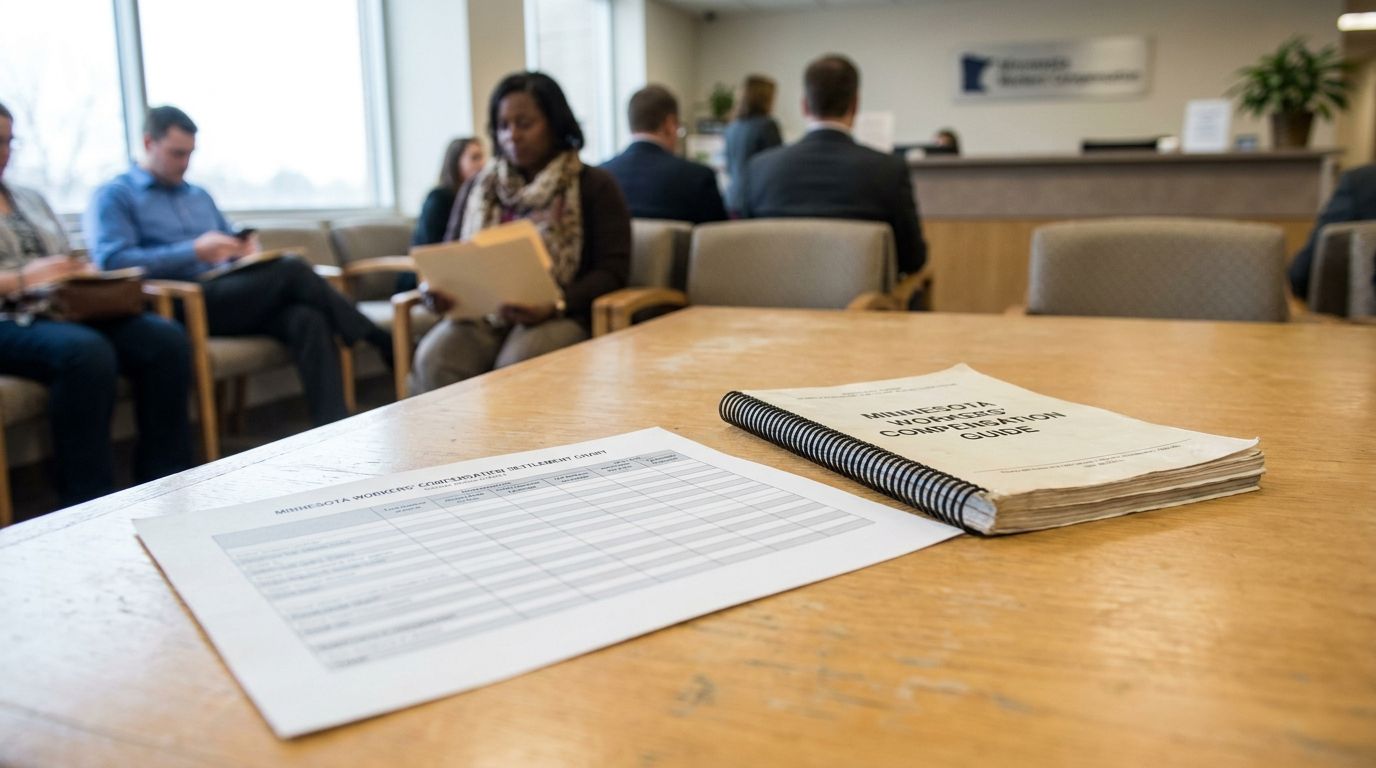


When a Pre-Existing Neck Condition Meets a Workplace Injury in Minnesota
Many workers in Shakopee and throughout Minnesota live with pre-existing neck conditions like degenerative disc disease, prior cervical spine injuries, or chronic neck pain. When a workplace incident makes that condition significantly worse, workers’ compensation can still cover you. Under Minnesota Statutes Chapter 176, a work-related injury that aggravates or accelerates a pre-existing condition is fully compensable. Minnesota law does not require a perfectly healthy neck before your injury. What matters is whether your job caused a new injury or made an existing condition measurably worse, supported by medical documentation.
If you have questions about a neck injury workers comp claim involving a pre-existing condition, Mottaz & Sisk Injury Law can help. Call 651.362.9130 or reach out online to discuss your situation.

How Minnesota Law Defines a Compensable Neck Injury Workers Comp Claim
Minnesota’s workers’ compensation system is governed by Minnesota Statutes Chapter 176, which defines covered injuries and benefit procedures. Section 176.011 defines "personal injury" and "occupational disease" to include any condition caused, aggravated, or accelerated by employment activities.
The critical legal principle is that fault is irrelevant in Minnesota workers’ comp claims. If the injury arose out of and in the course of employment, you should be covered. This no-fault structure is especially important for workers with pre-existing neck conditions, insurers cannot deny your claim simply by pointing to a prior diagnosis.
What "Aggravation" Means Under Chapter 176
An aggravation claim arises when a workplace event or occupational exposure makes a pre-existing condition clinically worse. For example, a construction worker in Shakopee with mild degenerative disc disease may function without restrictions for years. If that worker falls from scaffolding and herniates a disc, the work injury aggravated the underlying condition. The entire resulting disability, including surgical treatment and recovery, may be compensable despite pre-existing degenerative changes.
Medical evidence is the cornerstone of any aggravation claim. Your treating physician’s opinion on whether the work incident substantially worsened your pre-existing condition carries significant weight. Courts look for objective findings such as new MRI abnormalities, documented loss of range of motion, or newly indicated surgical intervention.
💡 Pro Tip: Ask your treating physician to document how your workplace injury specifically worsened your pre-existing neck condition. A clear medical opinion linking the aggravation to the work event strengthens your claim.
Pre-Existing Neck Conditions That Commonly Arise in Workers’ Comp Claims
Workers across several industries frequently present with pre-existing cervical spine conditions that worsen after a workplace injury. Understanding which conditions commonly intersect with work injuries can help you evaluate your situation.
| Pre-Existing Condition | Common Aggravating Work Event | Industries Most Affected |
|---|---|---|
| Degenerative disc disease | Falls, heavy lifting, repetitive overhead work | Construction, manufacturing |
| Prior cervical fusion | Rear-end collision in company vehicle, fall from height | Transportation, warehousing |
| Cervical stenosis | Sustained awkward postures, impact injuries | Healthcare, manufacturing |
| Prior whiplash injury | Forklift accident, loading dock collision | Warehousing, transportation |
| Cervical radiculopathy | Repetitive motion, vibration exposure | Construction, industrial work |
A pre-existing neck condition workers compensation Minnesota claim does not fail simply because imaging shows age-related changes. Nearly every worker over 40 has some cervical degeneration visible on MRI. The legal question is whether the work event caused a distinct worsening that resulted in new symptoms, functional limitations, or newly required treatment.
💡 Pro Tip: If prior medical records show your neck condition was stable before the work injury, gather those records as evidence of measurable change.
Reporting Your Injury and Protecting Your Claim
If you suffer a neck injury at work or notice your pre-existing neck condition has worsened, report it to your employer immediately. Minnesota law requires prompt reporting, and delays can jeopardize benefits. Under Minnesota Statutes § 176.141, reporting within 14 days preserves your full right to compensation. Reporting between 15 and 30 days may still proceed unless the employer shows prejudice. After 30 days, compensation may be allowed up to 180 days if the delay was due to mistake, inadvertence, ignorance, inability, or employer misrepresentation. Beyond 180 days, benefits are generally barred. Follow the workers’ compensation claim process.
Steps to Take After a Cervical Spine Work Injury
Taking the right steps early can make or break your neck injury claim. Follow this sequence:
- Report the injury to your supervisor in writing and keep a copy
- Seek medical treatment promptly and inform your provider the injury is work-related
- Describe your pre-existing condition and explain how the work event changed your symptoms
- Document everything, including dates, witnesses, and how the injury occurred
- Follow all recommended treatment and keep copies of medical records
You generally have the right to choose your own health care provider for treatment of a work-related injury in Minnesota. Exceptions may apply if your employer participates in a certified managed care plan or a collective bargaining agreement governs provider choice. Selecting a physician who understands both your pre-existing condition and the work injury mechanism can improve medical documentation quality.
💡 Pro Tip: When reporting your injury, be specific. Instead of "my neck hurts," describe what happened: "I was lifting a patient and felt sharp pain shoot down my left arm that I never experienced before."
What Benefits Are Available for an Aggravated Neck Injury at Work
Minnesota workers’ compensation provides several categories of benefits for injured workers with aggravated pre-existing conditions. These include medical care related to the injury, wage-loss benefits if you cannot work or must reduce hours, benefits for permanent damage to body function, vocational rehabilitation services if you cannot return to your prior job, and travel mileage for medical appointments.
Wage-loss benefits are often the most immediate concern for workers with serious cervical spine injuries. If your aggravated neck condition requires surgery, you could face weeks or months away from work. Temporary total disability benefits generally replace a portion of lost wages during recovery. Permanent partial disability benefits may apply if you sustain lasting functional impairment after reaching maximum medical improvement.
When Benefits Are Denied
A denial does not mean your claim has no merit. Insurance companies routinely deny claims involving pre-existing conditions, arguing current symptoms are solely attributable to the prior condition. If your claim is denied, you have the right to dispute through the Minnesota Department of Labor and Industry and the Office of Administrative Hearings. This may include requesting an administrative conference, mediation, or filing a claim petition for a formal hearing before a compensation judge.
💡 Pro Tip: If your neck injury workers comp claim is denied, do not assume the insurer’s decision is final. Many denials involving pre-existing conditions are successfully overturned with strong medical evidence and legal advocacy.
Why Medical Documentation Matters More With a Pre-Existing Condition
The strength of your degenerative disc disease workers comp claim depends heavily on the medical record. When a pre-existing condition is involved, insurers will scrutinize your treatment history to argue that current symptoms are simply a continuation of an old problem. Your medical records need to clearly show the difference between your condition before and after the work injury.
Your treating physician’s causation opinion is often the most important evidence in an aggravation claim. The doctor should address whether, to a reasonable degree of medical certainty, the work injury substantially contributed to your current need for treatment. This opinion should reference objective findings, such as new disc herniations on imaging, worsening nerve compression, or newly indicated surgical intervention. If you are unsure whether your prior neck problems affect your claim, getting clarity on how Minnesota law handles these situations is important.
💡 Pro Tip: Request a copy of every medical report during treatment. Review it to ensure the provider accurately recorded how the injury occurred and how your symptoms differ from baseline.
Building a Strong Neck Injury Claim in Shakopee, MN
Workers in Shakopee face the same challenges as injured employees across Minnesota when filing a cervical spine work injury claim involving a pre-existing condition. Construction projects, manufacturing facilities, healthcare settings, and warehousing operations in the Shakopee area all carry risks for neck injuries. The key elements of a successful claim remain: timely reporting, thorough medical documentation, and a clear medical opinion connecting the work event to the worsening of your condition.
Working with a workers compensation lawyer Minnesota residents trust can help you navigate the complexities of an aggravation claim. An attorney experienced in Minnesota workers’ comp pre-existing condition cases understands how to present medical evidence effectively, respond to insurer defenses, and pursue the full range of benefits you may be owed.
Frequently Asked Questions
1. Can I file a neck injury claim in Shakopee MN if I already had degenerative disc disease before my work injury?
Yes. Minnesota law recognizes that a work injury which aggravates or accelerates a pre-existing condition like degenerative disc disease is compensable. The key is medical evidence showing the work event made your condition measurably worse.
2. Does it matter if my employer says the injury was my fault?
No. Minnesota workers’ compensation is a no-fault system. Who caused the accident doesn’t matter, only whether the injury arose out of and in the course of your employment.
3. What should I do if the insurance company denies my claim because of my pre-existing neck condition?
You can dispute the denial through the Minnesota Department of Labor and Industry and the Office of Administrative Hearings. This may involve requesting an administrative conference, mediation, or filing a claim petition. A denial based on a pre-existing condition does not end your claim.
4. How long do I have to report a neck injury to my employer?
Report immediately. Under Minnesota Statutes § 176.141, reporting within 14 days fully preserves your right to compensation. Reporting between 15 and 30 days may still be sufficient unless the employer demonstrates prejudice. After 30 days, compensation may be allowed up to 180 days only if the delay was due to qualifying reasons.
5. Can I choose my own doctor for treatment of a work-related neck injury?
In most situations, yes. Minnesota law generally allows employees to choose their own health care provider for work-related injuries. Exceptions may apply if your employer participates in a certified managed care plan or if a collective bargaining agreement governs provider selection.
Protecting Your Right to Benefits After a Workplace Neck Injury
A pre-existing neck condition does not disqualify you from receiving workers’ compensation benefits in Minnesota. The law is clear that injuries caused, aggravated, or accelerated by employment activities may be compensable, including situations where degenerative changes or prior injuries existed. What matters most is timely reporting, strong medical documentation, and a physician’s opinion connecting the workplace incident to the worsening of your condition. Understanding your rights under Minnesota Statutes Chapter 176 puts you in a stronger position to pursue the benefits you may be owed.
If you are dealing with a neck injury that worsened because of your job, the team at Mottaz & Sisk Injury Law is ready to help you evaluate your claim. Call 651.362.9130 or contact us today to discuss your situation and learn what steps to take next.